Apple Rebuilt Siri on Gemini and Opened the iPhone to Claude. The Assistant Layer Just Became Swappable.
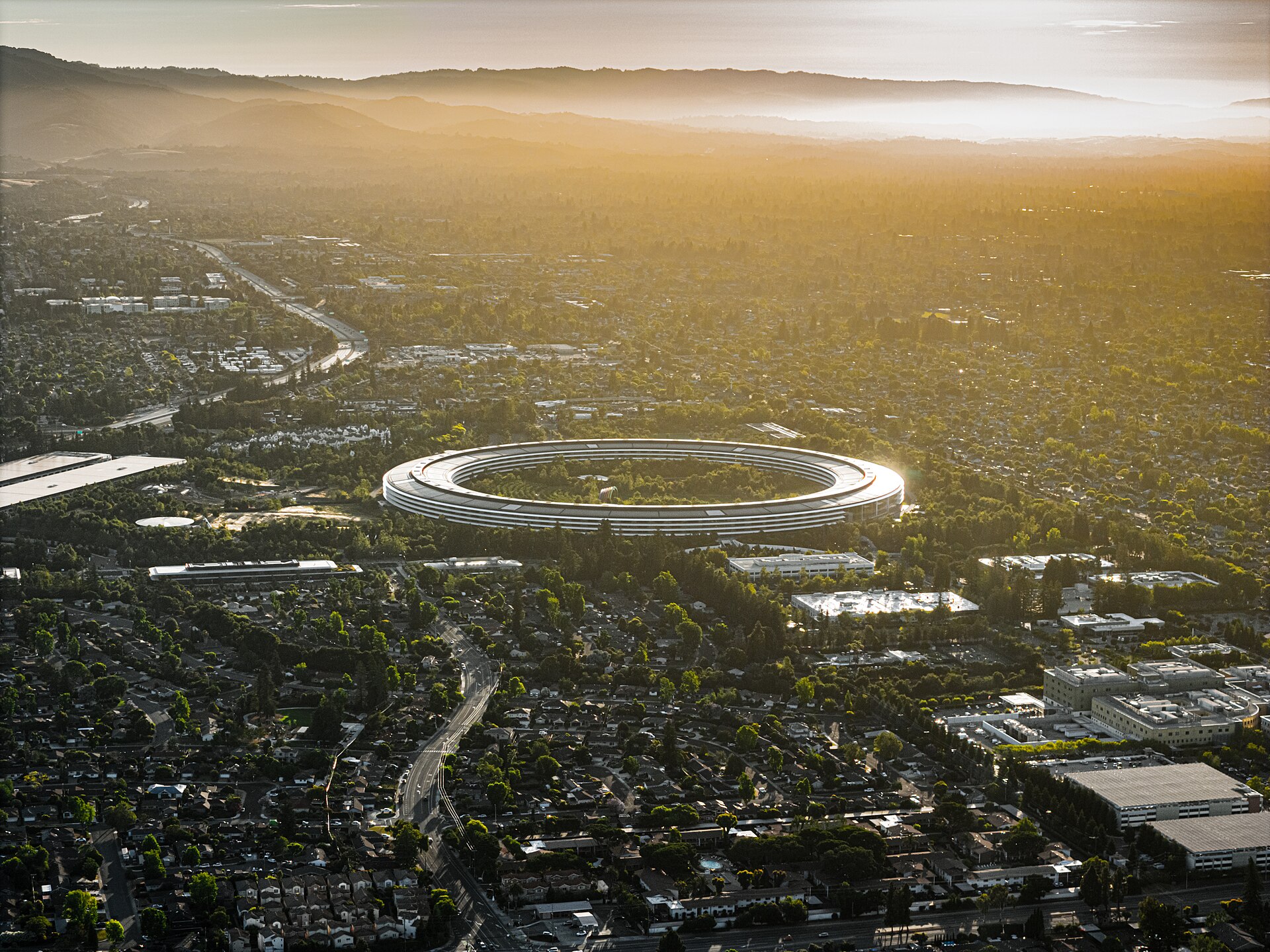
Tim Cook walked out at Apple Park this morning for his last keynote as CEO and handed the most interesting part of the iPhone to other people's models. The rebuilt Siri runs on a custom Google Gemini model. iOS 27 ships an Extensions system that lets you make ChatGPT, Gemini, or Claude your default assistant. For the first time, the thinking part of the phone is a setting you can change rather than a thing Apple builds and you accept.
That is the story under the story. Everyone will lead with "Apple gave up and licensed Gemini." True, and it matters. But the part that reshapes the model market is the second announcement, the one that turns a billion iPhones into a surface where the model is interchangeable.
What Apple Actually Announced
Two things, and they are not the same thing. First, Siri itself. Apple rebuilt it on a custom 1.2-trillion-parameter Gemini model that Google built to spec, running under a multi-year deal reported at roughly $1 billion a year. Apple is not pointing Siri at the public Gemini app. It licensed a private model, and the contract reportedly bars Google from training future Gemini versions on Siri queries.
Second, Extensions. iOS 27 lets a third-party AI provider serve as the intelligence layer behind Apple Intelligence features. Swipe down from the top center and you get an Ask panel that can run system shortcuts, search your phone, or hand a hard query to a chatbot you chose. ChatGPT was already a bolt-on under the old system. Now Gemini and Claude join it, and any of the three can be set as the default. Claude on an iPhone as a first-class assistant is new today.
Cook also previewed homeOS and the M5 Mac line, and the whole iOS 27 release is being framed as a deep clean: better battery, fewer bugs, less novelty for its own sake. Fine. The model news is the news.
The Three-Tier Routing Is the Tell
Siri does not send everything to Google. Apple built a router, and the router is the part worth reading closely, because it is the same architecture every serious agent product is converging on: cheap local work stays local, hard work goes to the biggest model available.
| Tier | Where it runs | Handles |
|---|---|---|
| On device | Apple foundation models on the phone | Simple, fast, private tasks |
| Private Cloud Compute | Apple silicon servers | Moderately complex requests |
| Google Cloud | Custom Gemini on Nvidia Blackwell B200 | Heaviest reasoning |
Look at where the heavy tier lands. Apple, the company with the largest install base on the planet, decided it could not build the top reasoning tier in time, so it is renting it from Google and running it on Nvidia GPUs. That is two dependencies Apple spent a decade trying to avoid, accepted in one keynote. When the most vertically integrated company in tech rents the frontier instead of building it, that tells you how steep the frontier curve still is.
Why Extensions Is Bigger Than the Gemini Deal
The Gemini deal is a procurement decision. Apple needed a frontier model, Google had one, money changed hands. In two years Apple can swap the supplier and most users will never know. That is what a good abstraction looks like, and Apple just built one for itself.
Extensions builds the same abstraction for everyone else. Once the default assistant is a dropdown, the model stops being a brand you marry and becomes a component you select. That is a structural shift, and it cuts in a direction the labs have spent a fortune fighting. The whole point of ChatGPT, Gemini, and Claude as consumer apps was to own the relationship: be the icon people tap, be the habit. Apple just put all three behind one swipe and said, pick whichever, switch whenever.
For an aggregator like us this is the entire thesis. The assistant layer is becoming a routing problem, on the phone exactly like in the API. The question stops being "which model do you use" and becomes "which model for this task, right now, at this price." The three options Apple is handing iPhone users line up almost exactly with the three flagships people already compare.
| Default option | Provider | Status on iPhone |
|---|---|---|
| ChatGPT | OpenAI | Carried over, now one of several |
| Gemini | New as a direct option, also powers Siri | |
| Claude | Anthropic | First time as a selectable iPhone assistant |
If you want to actually compare the three on capability rather than vibes, that is what our benchmarks page and the Claude vs GPT vs Gemini breakdown are for. The point is that the comparison is now a consumer decision, not just a developer one.
Who Wins, Who Pays
Google is the obvious winner on paper. A billion dollars a year, a Siri integration that puts Gemini under the most-used assistant on earth, and a second slot as a direct Extensions option. But there is a quieter cost. The custom-model, no-training-on-queries terms mean Google gets Apple's money without Apple's data, and being the invisible engine under Siri does not build the Gemini consumer brand the way being the app would. Google traded brand for distribution. That is probably the right trade. It is still a trade.
Anthropic gets the cleanest win relative to expectations. Claude has never been a consumer phone default anywhere, and it just became one on the platform that sets the terms for premium mobile. No reported billion-dollar check required, no infrastructure to staff. Claude has been taking real consumer share this year, and a default-assistant slot on the iPhone is a distribution channel it could not have bought at any price.
OpenAI is the interesting one. ChatGPT went from the only third-party brain Siri could borrow to one of three names in a dropdown. Being first is worth something. Being the default people never change is worth more, and Apple just made the default a choice. The exclusivity that made the original ChatGPT-Siri tie-up notable is gone.
Apple pays the billion and gives up a piece of the narrative it has guarded since 2011, that the assistant is Apple's. In exchange it gets a Siri that finally works and an Extensions framework that lets it stay neutral while the labs fight over the dropdown. Neutral is a good place to stand when you own the surface and everyone else is renting space on it.
The Part to Watch
One detail decides how much of this matters: the default. If iOS 27 ships with Gemini-powered Siri as the assistant and Extensions buried three settings deep, most people never touch it, and the dropdown is theater. If Apple surfaces the choice at setup, the way it surfaces the default browser and search engine, then switching becomes normal and the model market gets a consumer-grade churn dynamic it has never had. Watch the onboarding flow in the iOS 27 betas this week. That flow is the whole ballgame.
The other thing to watch is whether the no-training clause holds and whether Apple ever discloses how often Siri actually escalates to the Google tier. A router that sends 90 percent of traffic to on-device models is a very different business for Google than one that sends 90 percent to Blackwell. Apple will not volunteer that number. The inference bill eventually will.
For a decade the iPhone treated intelligence as a feature Apple owned. As of this morning it treats intelligence as a supply chain it manages, with three vendors in the dropdown and a fourth it built itself. That is the most consequential thing said at Apple Park today, and Cook said it on his way out the door. We are adding the Apple assistant tiers to how we track the model layer, because the phone in your pocket is now a model router, and the only question that matters is which one it points at.