Anthropic Is Negotiating a Fourth Chip. Claude Inference Just Stopped Being a Nvidia Story.
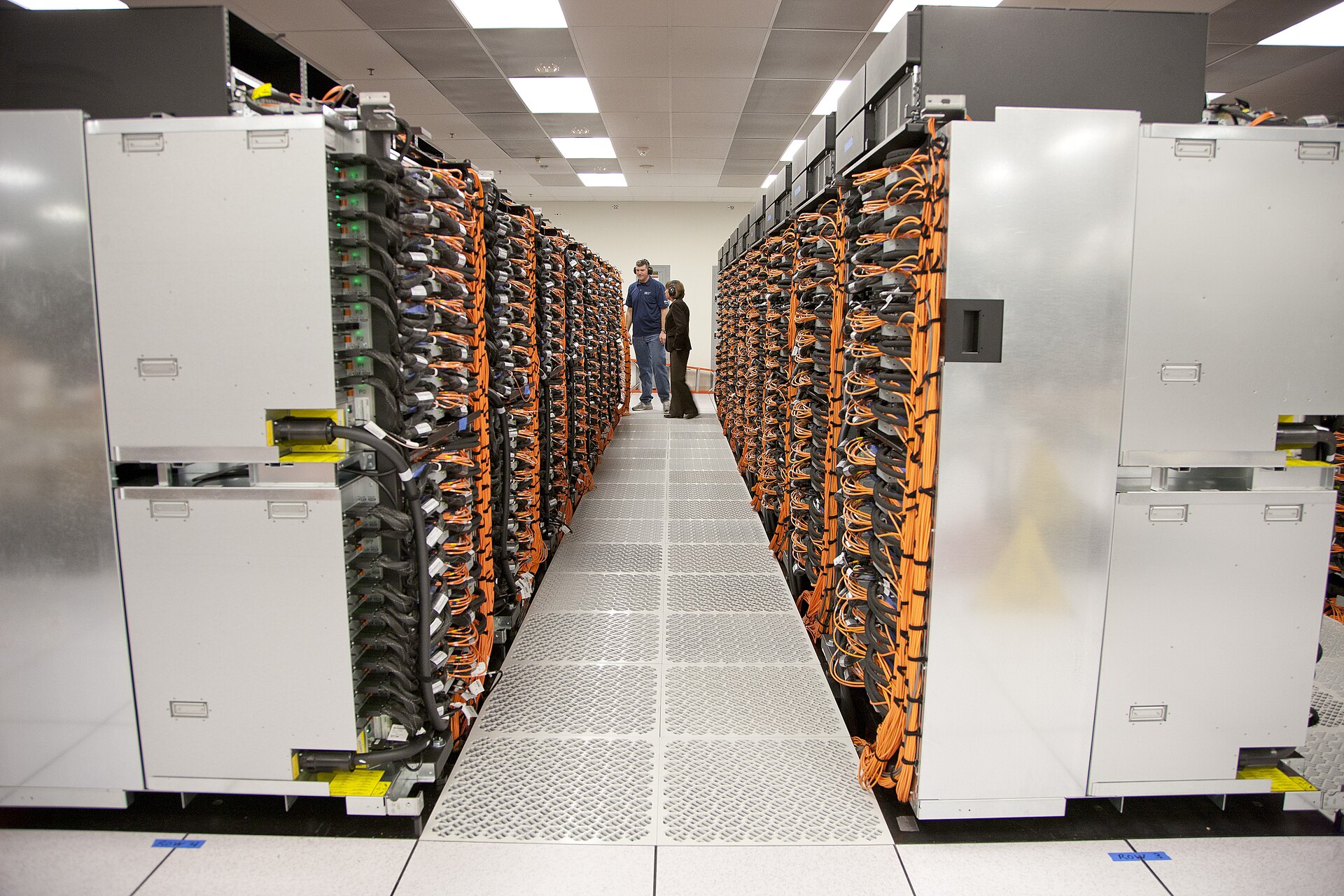
The reporting is a couple of weeks old now, but the implication keeps getting bigger, so it is worth slowing down on. Anthropic is in early-stage talks with Microsoft to run Claude inference on the Maia 200, Microsoft's second-generation custom AI accelerator, served through Azure. Nothing is signed. CNBC put the talks at a preliminary stage, and Anthropic has not confirmed a deal. Treat it as a negotiation, not an announcement.
The headline reads like another cloud procurement story. It is not. If this closes, the Maia 200 becomes the fourth distinct silicon platform that Claude runs on, after AWS Trainium, Google TPUs, and Nvidia GPUs. Four chips, four instruction sets, four compilers, one model family. That is the part worth sitting with. The most valuable model company in the world is making itself deliberately agnostic to the accelerator underneath it, and on a quiet news week that structural shift is the actual story.
What Is Actually On The Table
The Maia 200 is Microsoft's in-house inference accelerator, the follow-on to the Maia 100 it first showed in late 2023. It launched in January 2026 on TSMC's 3nm process, and Microsoft says it delivers more than 30 percent better performance per dollar than the prior generation of hardware in its Azure fleet. It is built for inference, meaning it serves already-trained models in production rather than training new ones. As of mid-2026 it is still in limited preview and has not gone generally available to Azure customers.
That last detail is why Anthropic matters to Microsoft as much as Microsoft matters to Anthropic. A custom chip is only as credible as the workloads willing to run on it. Landing a frontier lab as the first external Maia 200 customer would be the validation Microsoft's silicon program has been missing, the same way Project Rainier validated AWS Trainium and the billion-TPU deal validated Google's seventh-generation parts. The Maia program slipped once already, with mass production sliding from 2025 into 2026. An Anthropic logo on it changes the story from delayed to shipping.
The commercial wrapper is a $30 billion Azure compute commitment Anthropic signed alongside a reported $15 billion of combined investment from Microsoft and Nvidia. Today a large slice of that Azure spend buys rented Nvidia capacity. Redirecting even part of it onto Microsoft's own silicon, at a lower cost per token, is the entire economic logic of the talks. Anthropic gets cheaper inference. Microsoft keeps more of the margin in-house instead of passing it to Nvidia.
Claude Already Runs On Three Chips. Here Is The Map.
To see why a fourth platform is a strategy rather than a shopping spree, you have to look at the three Anthropic already operates. This is one of the most heterogeneous compute footprints any frontier lab runs.
| Platform | Owner | Primary role | Scale and status |
|---|---|---|---|
| AWS Trainium2 | Amazon | Primary training | Project Rainier, ~500K chips scaling toward 1M |
| Google TPU | Training and inference | Up to 1M units in 2026, over 1 GW of capacity | |
| Nvidia GPU | Nvidia | Training and inference | Rented across clouds, the industry default |
| Microsoft Maia 200 | Microsoft | Inference (proposed) | In talks, limited preview, nothing signed |
Read down the table and the pattern is obvious. Amazon stays the primary training partner through Rainier. Google carries the largest single block of capacity. Nvidia remains the universal fallback that runs anywhere. Maia would slot in as a dedicated inference option, the workload that is most cost-sensitive and most repetitive, which is exactly where a cheaper specialized chip pays off fastest.
Why A Fourth Chip At All
There are three reasons a model company chooses this much complexity on purpose, and all three are financial before they are technical.
The first is cost per token. Inference is now the dominant line item for a lab at Anthropic's scale, with reporting putting its revenue near a $47 billion annualized run rate. When you are serving that many tokens, a 20 or 30 percent swing in cost per token on even part of the fleet is real money, and custom silicon built for inference is how you chase it. Training is a capital event. Inference is a recurring bill, and recurring bills are where margin lives or dies.
The second is supply and leverage. A lab that can credibly run on four platforms is never hostage to one vendor's allocation, one fab's yield, or one cloud's pricing. Every chip you can deploy to is a chip the others have to price against. Anthropic negotiating with Microsoft, Google, Amazon, and Nvidia at once is not redundancy, it is bargaining position.
The third is the training-versus-inference split itself. You do not need your most flexible, most expensive hardware to serve a frozen model. Once Claude is trained, inference is a narrower, more predictable problem, which is precisely the kind of workload that ports cleanly to specialized accelerators like Maia, Trainium, and TPU. The hard, experimental work stays on the general-purpose parts. The high-volume, well-understood work migrates to whatever is cheapest per token.
The Pattern Under The Deal
Step back from Anthropic specifically and the bigger picture is that frontier inference is de-coupling from Nvidia. For years the shorthand was that AI runs on Nvidia. That is still true for a lot of training and for any workload that needs to move fast. But inference, the part that scales with users rather than with research, is increasingly running on hyperscaler-owned silicon: AWS Trainium, Google TPU, and now potentially Microsoft Maia.
Each of those three exists for the same reason. Amazon, Google, and Microsoft would all rather buy their own chips once than pay Nvidia's margin on every token forever. A frontier lab willing to do the porting work is the lever that turns those internal projects into real businesses. That is the same dynamic we wrote about when Anthropic committed to a million Google TPUs, and it is the demand-side mirror of Nvidia's investor-customer loop. The accelerator monopoly is not breaking at the training layer yet. It is eroding at the inference layer, one custom chip at a time.
Whether this particular erosion shows up in physical capacity is the kind of thing we track on the AI infrastructure tracker, where the data-center and power commitments behind these chip deals get logged as they move from announced to operational.
What It Means If You Build On Claude
For developers calling the API, the direct effect is supposed to be invisible, and that is the point. You do not pick the chip. You call the model. Anthropic absorbing a fourth accelerator is the company doing the unglamorous portability work so that the endpoint stays the same while the cost basis underneath it gets cheaper and more resilient.
The indirect effects are the ones to watch. More platform competition under the hood is downward pressure on inference cost, which is the input to every price cut Anthropic can eventually pass along. A more diversified fleet is also a more durable one: a lab that can serve Claude from four places is harder to knock offline by any single vendor outage or allocation crunch, which is the kind of thing that shows up in the uptime numbers on our status page long before it shows up in a press release.
The caveat deserves equal weight. None of this is signed. Early-stage talks fall apart, custom silicon misses its performance claims, and a chip in limited preview is not a chip you can plan a quarter around. The right posture is to treat Maia 200 as a signal about where inference economics are heading, not as capacity you can count on this year.
Our Take
The interesting thing about this story is how boring Anthropic is trying to make it. A fourth chip is not a moonshot. It is a procurement decision dressed up as a moat. The lab is betting that the durable advantage is not owning one exotic accelerator, it is being indifferent to all of them, so that the model is the product and the silicon is a commodity it shops for.
That is a very different worldview from the one where a single vendor's chips are the bottleneck on the whole industry. If Anthropic is right, the long-run winner of the inference layer is whoever serves the most tokens at the lowest cost, regardless of whose logo is on the die. Maia 200 is one more data point that the market is moving that way.
Three things to watch over the next ninety days. First, whether the talks produce anything signed, or whether they stay a negotiating chip Anthropic uses against its other suppliers. Second, whether Microsoft moves Maia 200 from limited preview to general availability, because that is the tell that the silicon is actually ready rather than aspirational. Third, whether any of this reaches the eventual Anthropic prospectus as an inference-margin line, since cost per token is the one number in that filing that matters more than the valuation.